
Home »
A Practical Guide to Incoterms for Global Trade
Managing international freight is complicated, and assumptions can quickly turn into expensive problems.
- Who arranges customs clearance?
- Who pays for insurance?
- When does responsibility shift from seller to buyer?
These questions matter, especially when goods move through multiple carriers, countries, and compliance systems. Incoterms were created to prevent misunderstandings before they start. Incoterms, or International Commercial Terms, are published by the International Chamber of Commerce and define the responsibilities of buyers and sellers in global trade. They outline who handles each part of the shipping process and when financial and physical risk shifts from one party to the other. This includes who books and pays for transportation, who manages customs procedures, and who is responsible if cargo is damaged or lost. When both sides agree on the correct Incoterm, expectations are clear. Costs are easier to manage, customs delays are less likely, and communication becomes more straightforward. However, choosing the wrong term can create confusion at handoff points, increase storage fees, or lead to disputes that stall a shipment. This guide explains the basics of Incoterms in practical language and offers direction on how to choose the most suitable term for your business so you can keep freight moving with fewer surprises.
What is Global Trade Compliance? A Quick Guide for Importers and Exporters
Understanding trade compliance requirements helps prevent delays and added cost. This article explains essential rules, documentation needs, and practical steps companies can use to manage cross-border shipments more confidently.
How to Protect Your Supply Chain from the Growing Threat of Cargo Theft
Cargo theft continues to rise worldwide. This article outlines practical measures to reduce exposure, strengthen shipment security, and work with partners who help protect goods throughout each stage of your supply chain.

Get Guidance on the Right Incoterms for Your Shipments
If your shipping terms no longer match your freight needs, let’s review them together. Dimerco helps you assess responsibilities, reduce preventable risk, and select Incoterms that reduce disruptions as cargo moves internationally.
Incoterms 2020 Overview
Incoterms influence real-world shipping decisions, from budgeting to customer satisfaction. A simple misunderstanding about responsibilities can delay a shipment or increase costs. For instance, if a $200,000 medical equipment order sits at a port because no one arranged customs clearance, storage fees accumulate and trust between trading partners can suffer. Incoterms define actions, responsibilities, and transfer points for risk and cost. They help prevent disputes when issues arise. There are 11 terms in the 2020 edition, each outlining the seller’s duties, the buyer’s duties, and the exact stage where responsibility shifts.
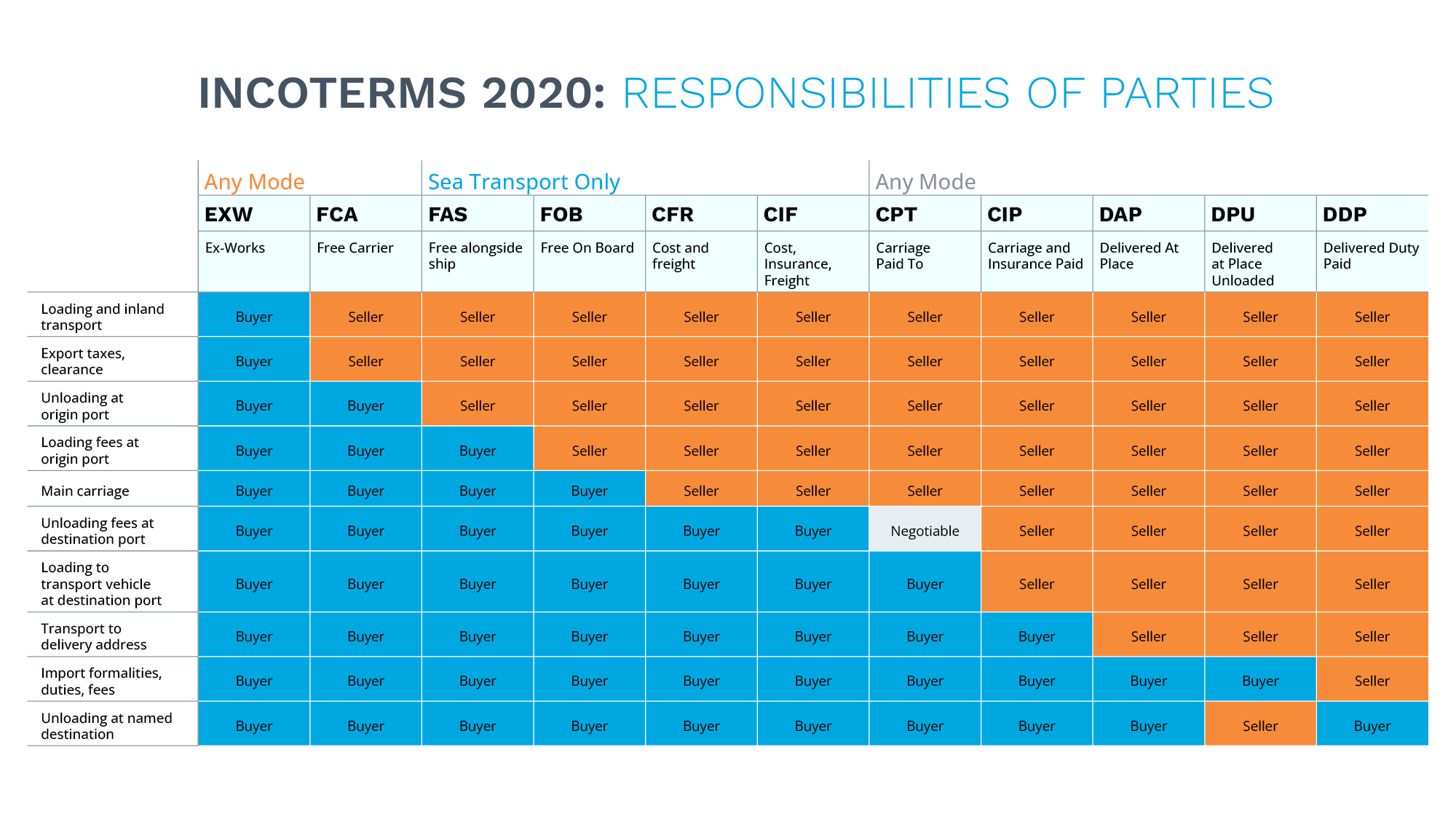
Confirm Your Incoterms Match Your Shipping Needs
A Practical Guide to Incoterms for Global Trade
This guide reviews, in plain language, the importance of Incoterms, how they work, and how you can structure the shipping and logistics aspects of purchase agreements to ensure smooth-flowing international flight.
Shipping from Vietnam: the Next Global Manufacturing Hub
Vietnam continues to expand as a manufacturing base due to competitive labor costs and strong export growth. Learn what shippers should consider when planning freight movements from Vietnam.
Incoterms 2020
A straightforward overview of Incoterms 2020 that explains how each rule allocates cost, responsibility, and risk, helping shippers choose terms that support smoother operations.
A Closer Look at Specific Terms
Some Incoterms can look similar at first glance, especially for beginners. DAP and DDP both involve delivery to the buyer’s location, while EXW and FCA begin with buyer-arranged pickup. The distinctions matter. Selecting the wrong term can trigger compliance issues, added fees, or shipment delays that strain production schedules. Industries such as electronics and medical devices face tight timelines, so even a small misunderstanding can create significant disruption. In this section, we highlight two terms that are often confused and explain how Dimerco customers apply them successfully.
The DDP Trap and Why Delivered at Place Works Better
DDP can create complications for sellers due to import requirements. Learn why many companies prefer DAP for predictable handoffs, cost control, and fewer compliance risks.
What Are the Advantages of Ex Works Incoterms for Import-Oriented Buyers?
EXW gives buyers full control of freight from the start. Find out why import-focused companies use EXW to manage routing, transit times, and landed cost.
Tariff Wars: Understanding Country of Origin
Country of origin affects duty rates, trade program eligibility, and compliance requirements. This guide explains how accurate classification helps avoid costly errors during shifting tariff conditions.
What Incoterm Should I Use?
Key Considerations:
What mode of transport are you using?
- Some terms (like FAS, FOB, CFR, CIF) apply only to ocean shipping
How much control do you want over freight and costs?
- More control: EXW, FCA
- Less control: DAP, DDP
Where should the risk transfer?
- Early transfer = more buyer responsibility
- Late transfer = more seller responsibilit
Who handles export and import formalities?
- Make sure both parties are legally and practically able to perform their duties.
What Are Incoterms and How to Use Them Effectively
A practical introduction to Incoterms that explains how responsibilities shift between buyers and sellers and how to choose terms that support smooth cross-border shipping.
Incoterms 101: A Simple Incoterms Guide
A beginner-friendly explanation of Incoterms, focusing on how each rule affects transportation, customs, and risk throughout a shipment.
Improve Control of Your Cross-Border Responsibilities
Unclear Incoterms can complicate customs, routing, and cost ownership. Dimerco can walk you through practical adjustments that bring more predictability to your supply chain and reduce avoidable delays.
When and Why to Change Incoterms
Incoterms are not permanent. As markets shift, regulations evolve, and suppliers change their capabilities, the terms you once used may no longer support your goals. Reviewing them regularly helps prevent inefficiencies that slowly increase total landed cost or reduce your control over freight flow. A company that once relied on DAP may switch to EXW for better control of routing, or a seller may discontinue DDP when entering new countries due to licensing restrictions. Updating Incoterms ensures your shipping terms reflect current conditions, not outdated assumptions.
When It Might Be Time to Change:
- You’re sourcing from a new country and don’t know the export requirements
- Your buyer wants more control over freight
- You’re experiencing delays with import clearance
- A new logistics partner offers better pricing or service under different terms
- Duties or tariffs have changed and affect who should pay them
Tips for Making the Switch:
- Renegotiate contracts in writing. Make sure both parties agree on the new term.
- Check that your new responsibilities align with your capabilities.
- If needed, ask your logistics provider to help draft new shipping instructions.
- Incoterms should support your goals, not restrict them.
When and Why to Change Your Incoterms for Global Shipping Success
Learn why periodic review of Incoterms helps prevent rising costs, avoid delays, and align responsibilities with current market and supplier conditions.

Incoterms FAQ
Incoterms may seem simple on paper, but in practice, they raise a lot of questions, especially when things go wrong. In this section, we address some of the most common questions logistics professionals ask when they’re shipping globally. These answers are designed to help you avoid confusion and make better decisions the next time you review a contract, approve a quote, or book a shipment.
Are Incoterms used in air freight?
Are Incoterms used for domestic shipments?
Who decides on the Incoterm for a contract?
How do Incoterms impact duty payments?
How many Incoterms are there?
How often are Incoterms updated?

Resolve Common Incoterm Missteps Before They Slow You Down
Misunderstandings at handoff points can result in storage charges or compliance issues. Dimerco can help you identify gaps and set clearer expectations with your suppliers and partners.
Make Incoterms Work for You
You do not need to memorize every detail of all 11 Incoterms to manage international freight successfully. What matters is understanding how each term affects responsibility, risk, cost, and control throughout the shipment. Once you know which elements matter most to your business, you can select terms that better support your supply chain goals. Dimerco works with global shippers across Asia, North America, and Europe who rely on precise coordination to keep production running and customer orders fulfilled. Our teams help you select the right Incoterm for each shipment, prepare supporting documents, and stay compliant with local regulations. We also monitor market conditions so you can avoid preventable disruptions. Whether you move electronics, medical devices, fashion goods, or industrial components, your supply chain depends on predictable transportation and accurate communication. One of the most effective ways to achieve this is by choosing the correct Incoterm for each shipment and making sure all parties involved understand what that term requires. A thoughtful approach to Incoterms strengthens planning, improves handoffs, and reduces unnecessary expense. With the right partner, you can keep freight moving with fewer complications and more confidence.