Cross-border trucking in Asia is becoming an increasingly important logistics solution as companies seek faster, more reliable alternatives between China and Southeast Asia. As supply chains across Asia face rising airfreight costs, persistent port congestion, and growing demand for reliability, cross-border trucking is emerging as a strategic alternative. No longer just a backup option, it is becoming a mainstream solution for companies moving goods between China and Southeast Asia.
Why Cross-Border Trucking in Asia Is Growing
Several structural shifts in Asia’s logistics landscape are accelerating the adoption of cross-border trucking as a viable alternative between air and ocean freight.
- Rising Airfreight Costs and Limited Capacity – Airfreight remains the fastest option, but rising fuel costs, tight capacity, and frequent schedule disruptions have made it increasingly expensive and less predictable. For shipments that require reliable transit times but do not justify airfreight costs, cross-border trucking offers a practical middle ground.
- Port Congestion and Ocean Freight Delays – Persistent port congestion, vessel delays, and container shortages continue to impact ocean freight reliability. Longer transit times and additional charges such as detention and demurrage are eroding the traditional cost advantage of ocean shipping. Cross-border trucking helps businesses bypass port congestion and improve transit predictability, particularly for time-sensitive cargo.
- Improved Customs Coordination Across Asia – Governments across Asia are streamlining cross-border clearance through paperless documentation, joint inspections, and pre-clearance programs. These improvements reduce border waiting times and enhance the efficiency of cross-border trucking.
- RCEP and Regional Trade Facilitation – The Regional Comprehensive Economic Partnership (RCEP) is accelerating intra-Asia trade by reducing tariffs and harmonizing trade rules. This creates favorable conditions for cross-border trucking between China and Southeast Asia.
- Stronger Regional Road Connectivity – Ongoing infrastructure upgrades and expanding road networks are improving connectivity between China, Vietnam, Thailand, Malaysia, and Singapore. As a result, cross-border trucking is increasingly filling the gap between slow ocean freight and costly airfreight, offering a more balanced and reliable logistics alternative.
Why Cross-Border Trucking for China–Southeast Asia
Cross-border trucking in Asia is becoming an increasingly attractive option for companies moving goods between China and Southeast Asia, offering advantages in speed, cost control, and operational flexibility.
- Faster Door-to‑Door Transit – Cross-border trucking enables direct door-to-door delivery, reducing multiple handling points, port transfers, and intermediate storage. Compared with ocean freight and airfreight connections, this results in more predictable transit times. This makes cross-border trucking well suited for:
- Electronics and components
- E-commerce shipments
- Retail goods
- Manufacturing spare parts
- Urgent replenishment shipments
- Better Cost Control – Cross-border trucking typically costs less than airfreight while offering faster transit than ocean freight. Flexible full-truckload and consolidated shipping options allow businesses to ship smaller volumes more frequently while maintaining cost efficiency. It also helps businesses avoid hidden costs such as:
- Port storage charges
- Demurrage and detention fees
- Multiple handling costs
- Simplified Customs Clearance – Improved customs coordination across Asia is making cross-border trucking more efficient and reliable. Streamlined processes help reduce delays and operational risks, including:
- Pre-clearance documentation
- Faster border inspections
- Reduced risk of shipment delays
As a result, cross-border trucking provides a practical, low-investment solution for companies expanding into Southeast Asia. By leveraging established cross-border logistics networks, businesses can enter new markets faster, scale operations more flexibly, and maintain better cost control.
Cross-Border Trucking at a Glance
| Dimension | Ocean Freight | Airfreight | Cross-Border Trucking |
|---|---|---|---|
| Transit Time | 22 days (Shanghai – Singapore) | 24-48 hours | Within 8 days (Shanghai – Singapore), 14 days faster than ocean freight |
| Cost | Lower | Higher | About 56% lower than airfreight |
| Capacity Stability | Affected by blank sailings / skipped port calls | Affected by flight schedules / cargo space availability | Fixed schedules, dedicated fleet |
| Best Fit | Large volume, low frequency | Urgent, high-value cargo | Medium- to high-frequency, cost-sensitive shipments |
What to Look for in a Cross-Border Trucking Partner in Asia
As cross-border trucking in Asia becomes more important for China–Southeast Asia trade, selecting the right logistics partner is critical. Businesses should prioritize providers with strong regional coverage, customs expertise, and flexible service capabilities.
Regional Network Coverage
A reliable partner should have an established network connecting key markets across China and Southeast Asia, including Vietnam, Thailand, Malaysia, and Singapore. Broader regional coverage also provides greater flexibility during disruptions.
Balance Between Speed and Cost
Cross-border trucking is often used to bridge the gap between air and ocean freight. A strong logistics partner should be able to optimize routing to achieve both reliable transit times and cost efficiency.
For example, shipping from Shanghai to Singapore can be completed in approximately eight days, offering predictable delivery while reducing logistics costs by up to 56% compared with airfreight. This balance makes cross-border trucking a practical option for time-sensitive and cost-conscious shipments.
Customs Expertise and AEO Certification
 Cross-border trucking involves multiple customs authorities. Providers with strong customs expertise and AEO certification can benefit from lower inspection rates and faster clearance, helping reduce delays. Logistics providers with regional customs teams and AEO certification, such as Dimerco, can help improve cross-border efficiency.
Visibility and End-to-End Capabilities
Shipment visibility and integrated logistics capabilities are also important. Real-time tracking, warehousing, and multimodal options help improve coordination and supply chain resilience. Platforms such as MyDimerco further enhance shipment visibility and planning.
Flexible and Multimodal Service Options
 Cross-border requirements vary by shipment size and urgency. Providers should offer flexible solutions such as full truckload, consolidation, door-to-door delivery, and multimodal options, supported by regular and stable schedules. This flexibility allows businesses to adjust shipping strategies quickly in response to demand changes, production schedules, or supply chain disruptions.
Case Study: Cross-Border Trucking Preserves Holiday Sales
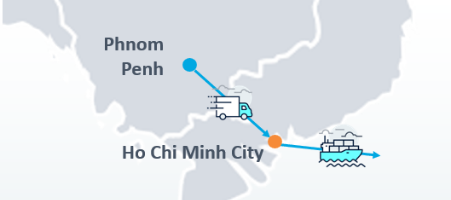
A global fast-fashion manufacturer faced weeks of delays shipping from Phnom Penh to the US due to limited feeder vessel capacity, putting peak holiday sales at risk. Dimerco implemented a road-sea solution, trucking empty containers from Ho Chi Minh City to Phnom Penh and returning loaded cargo for scheduled ocean departures. By replacing the constrained feeder leg, transit time was reduced by 3–4 weeks, helping the customer protect holiday sales and maintain delivery commitments.
This case highlights how cross-border trucking in Asia can help businesses overcome capacity constraints and protect time-sensitive shipments.
Enhancing Supply Chain Resilience in Asia
As supply chains across Asia continue to evolve, cross-border trucking in Asia is emerging as a practical alternative between air and ocean freight. With advantages in speed, cost efficiency, and flexibility, cross-border trucking in Asia helps businesses strengthen supply chain resilience and improve regional connectivity between China and Southeast Asia.
Partnering with an experienced logistics provider, like Dimerco, can help businesses evaluate routing options, navigate customs requirements, and optimize transit times across borders.
Looking to optimize your China–Southeast Asia shipments? Start a discussion with Dimerco’s logistics experts today.