India is becoming an increasingly important destination for electronics manufacturing, supported by government initiatives, growing domestic demand, and supply chain diversification. However, entering the market presents challenges, including complex customs procedures, upfront duty costs, and the need for flexible inventory management.
A customs-bonded warehouse in India helps address these challenges by enabling duty deferment, improving supply chain visibility, and supporting scalable production as companies expand their operations.
The Challenge: Enter India Without Slowing Down the Supply Chain
Expanding into India may appear straightforward at first, but operational complexity often emerges quickly. For global electronics manufacturers, production is only one piece of the puzzle. Imported components must move efficiently through customs, inventory must remain accurate, and supply chains must remain flexible as demand evolves.
For global electronics manufacturers, delays in a fast-moving electronics environment can quickly impact production schedules and increase costs. When establishing manufacturing and distribution infrastructure in India, companies commonly face several challenges:
- High upfront costs tied to duties and infrastructure investment
- Complex customs processes that could delay inbound shipments
- Limited visibility into inventory and shipment status
- Need for flexibility to scale operations without overbuilding
These challenges are especially significant during early-stage market entry, when companies need to test demand without committing excessive capital.
To address these issues, many manufacturers adopt a customs bonded warehouse in India as part of their supply chain strategy.
Bonded warehousing allows imported components to be stored without immediate duty payment, providing both operational flexibility and financial advantages.
The Role of a Customs Bonded Warehouse in India
A customs bonded warehouse in India allows companies to import goods and store them under customs control without paying duties or GST until the goods are released into the domestic market. This approach helps manufacturers:
- Defer duties and improve cash flow
- Maintain buffer inventory near production facilities
- Improve supply chain flexibility
- Reduce operational risks during market entry
When integrated with freight forwarding, customs brokerage, and distribution, bonded warehousing can create a more efficient end-to-end supply chain.
What an Effective Bonded Warehouse Setup Looks Like in Practice
When selecting a customs bonded warehouse in India, operational capabilities matter as much as location. The right provider should offer integrated services that reduce handoffs and improve execution.
End-to-End Process Control: An effective provider should manage the full workflow, including import customs clearance, bonded receiving and storage, inventory management, and order fulfillment. Integrating these functions helps reduce delays, improve coordination, and maintain consistency across the supply chain.
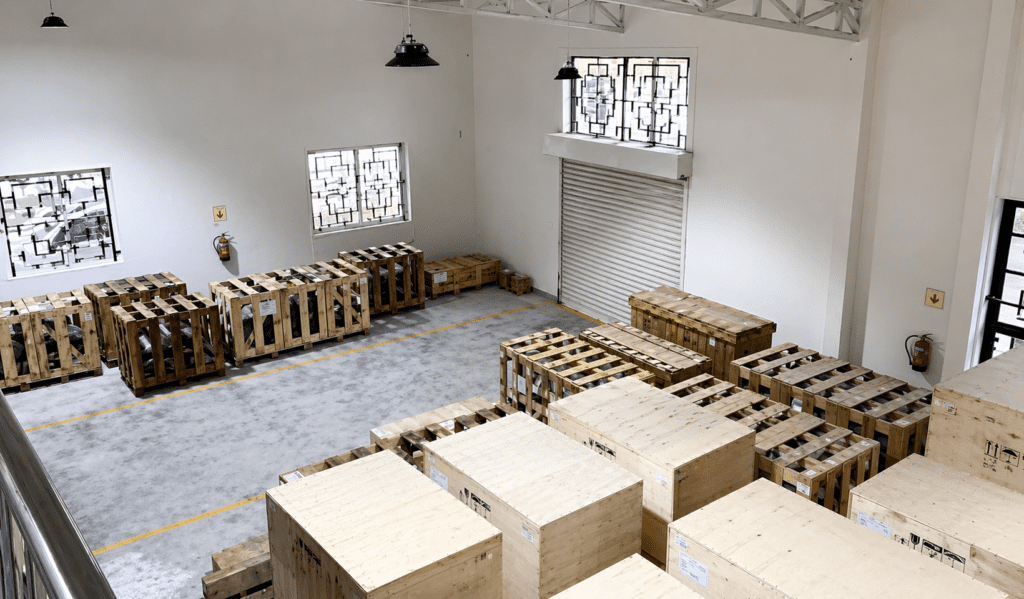
Inbound Accuracy and Validation: For high-value electronics, inbound accuracy is critical. A structured receiving process should include documentation verification, customs clearance coordination, and carton-level validation. Scanning and reconciliation against packing lists help ensure that inventory data remains aligned with physical stock, reducing operational risk.
Real-Time Inventory Visibility: Visibility is essential for managing production schedules. A customs bonded warehouse in India should provide:
- SKU-level storage and tracking
- System-driven location management
- Daily inventory reporting
- Regular cycle counts
Warehouse management systems allow manufacturers to monitor stock levels and movements in real time, improving planning and responsiveness.
Fast, Accurate Order Fulfillment: Outbound operations should balance speed and accuracy. System-driven picking, barcode or QR validation, and packing verification help ensure that shipments are accurate and ready for dispatch. Proof-of-delivery tracking further enhances transparency.
| Challenge | What the Right Service Provider Should Offer |
|---|---|
| High upfront duty payments impact cash flow | Duty deferment through a customs bonded warehouse in India to improve working capital |
| Complex customs regulations | End-to-end customs brokerage and compliance support |
| Limited visibility into inventory | Real-time warehouse management system and tracking |
| Inbound accuracy challenges | Structured receiving with validation checkpoints |
| Fluctuating demand | Flexible bonded storage and release based on production needs |
| Scaling operations | Ready-to-use infrastructure for rapid market entry |
| Order fulfillment accuracy | System-driven picking and multi-step verification |
| Global and local coordination | Integrated freight, warehousing, and distribution |
| Re-export or multi-market distribution | Bonded hub supporting domestic and export flows |
| Risk during market entry | Flexible “test-and-scale” operational model for market entry |
| Case Study: Supporting Electronics Manufacturing Expansion in India
For a top global gaming and high-performance computing brand, entering India required more than just moving freight. The company needed a flexible supply chain to support production while minimizing upfront investment and operational risk. In 2024, the company launched its first production facility in India to meet growing regional demand. To support this expansion, the company worked with Dimerco to design an integrated supply chain leveraging a customs-bonded warehouse. By leveraging Dimerco’s customs-bonded warehouse, the company positioned imported components closer to its Chennai production facility while deferring duties and maintaining inventory flexibility. This helped reduce working capital pressure, improve inbound visibility, and ensure production continuity. Dimerco also coordinated global shipments from multiple sourcing locations, consolidated inbound components, and supported domestic distribution. This integrated approach allowed the manufacturer to scale operations gradually while maintaining supply chain stability during market entry. |
Bangalore as a Strategic Logistics Hub
Bangalore is widely recognized as one of India’s leading technology and electronics manufacturing hubs.
Its strategic advantages include:
- Proximity to major technology clusters
- Strong road connectivity to manufacturing hubs such as Chennai
- Access to international air cargo gateways
- Growing network of logistics infrastructure
These factors make Bangalore a practical location for a customs bonded warehouse in India, allowing manufacturers to position imported components close to production facilities while maintaining customs compliance.
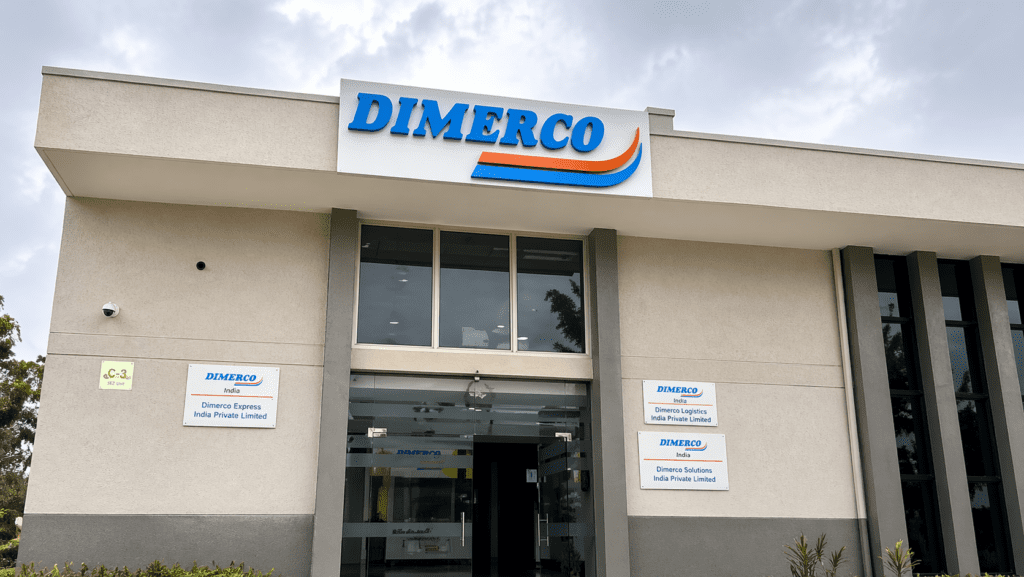
At Dimerco, our Bangalore customs-bonded warehouse serves as a strategic inventory hub, enabling manufacturers to defer duties, maintain buffer stock, and respond quickly to production requirements.
Key Benefits of a Customs Bonded Warehouse in Bangalore
For manufacturers expanding in southern India, Bangalore offers both operational and financial advantages. Its proximity to major electronics manufacturing hubs such as Chennai, along with strong logistics connectivity, makes Bangalore an effective location for managing imported components. Check out our complete guide to FTZ warehouses.
Duty and Tax Deferral
One of the primary advantages of using a bonded warehouse in Bangalore is the ability to defer import duties and GST until goods are released into the domestic market.
This allows manufacturers to store imported components without immediately tying up capital in duties. For electronics manufacturers supporting production in southern India, this setup provides:
- Improved cash flow management
- Reduced upfront tax exposure
- Better alignment between duty payments and production schedules
Instead of paying duties on inventory held for future production, companies can release goods based on actual manufacturing demand.
Faster and More Predictable Supply to Production
Production schedules depend on consistent component availability. With a Bangalore bonded facility, manufacturers can position imported components closer to production facilities such as Chennai. This reduces transit time between warehouse and factory, helping manufacturers:
- Maintain buffer stock for critical components
- Reduce production disruptions
- Improve supply chain predictability
This approach is particularly valuable for electronics manufacturers operating in fast-moving production environments where component availability is critical.
Flexible Inventory Management
Demand for electronics products can fluctuate quickly. A Bangalore bonded facility allows manufacturers to maintain buffer inventory while minimizing financial exposure. By storing components closer to southern India manufacturing hubs, companies can:
- Replenish production lines faster
- Adjust inventory levels based on demand
- Reduce excess inventory risk
Consolidation of Global Shipments
Electronics components typically originate from multiple global suppliers such as, Taiwan, China, South Korea, Japan, Southeast Asia, Europe, and North America.

By using a Bangalore bonded facility, manufacturers can consolidate inbound shipments before distributing components to production facilities. This reduces transportation complexity and improves inbound coordination.
Scalable Distribution Across Southern India
In addition to supporting production, a bonded warehouse in Bangalore can also function as a regional distribution hub. From Bangalore, manufacturers can efficiently distribute goods to:
- Chennai manufacturing facilities
- Southern India markets
- National distribution networks
This approach allows companies to scale operations while maintaining supply chain flexibility. With operations across six offices in India, including Bangalore, Chennai, Mumbai, Delhi, Hyderabad, and Ahmedabad, Dimerco supports manufacturers with both regional expertise and nationwide coverage.
Dimerco’s Advisory Services for Manufacturers Entering India
Beyond logistics execution, manufacturers entering India often require guidance in navigating regulatory requirements and designing supply chains. To support this need, Dimerco established an advisory services division in India to help global manufacturers expand into the Indian market. These advisory services help companies evaluate:
- Customs bonded warehouse strategies in India
- Warehouse location planning
- Duty and tax considerations
- Import compliance requirements
- Supply chain design for phased market entry
This guidance helps companies determine whether a customs bonded warehouse in India is the right approach and how to integrate bonded warehousing into their broader supply chain strategy.
Supporting Manufacturing Expansion in India
As India strengthens its role in global electronics manufacturing, supply chain flexibility becomes increasingly important. A customs bonded warehouse in India allows manufacturers to defer duties, improve inventory visibility, and scale operations efficiently.
With capabilities such as Dimerco’s Bangalore customs bonded warehouse and advisory services, manufacturers can establish operations with greater confidence while maintaining operational flexibility.
For companies exploring expansion into India, evaluating bonded warehousing strategies early can help build resilient and scalable supply chains. Start a discussion to explore the right approach for your operations.