
If your business involves importing or exporting freight, you’re likely working with a freight forwarder or considering one.
So, what does a freight forwarder do, exactly?
Freight forwarders are international shipping experts who help companies participate in global trade without having to master every logistical, regulatory, and compliance detail themselves. Their role in international freight forwarding includes negotiating and booking capacity with carriers, preparing and reviewing import and export documentation, coordinating duty payments, clearing customs, arranging cargo insurance, and providing shipment tracking and visibility.
Freight forwarder services also extend to problem-solving. When delays, disruptions, or regulatory issues arise, a forwarder steps in to manage exceptions and keep cargo moving.
What a freight forwarder does not do is physically transport your freight. That work is performed by ocean carriers, airlines, rail operators, and trucking companies. Instead, the freight forwarder designs the most efficient shipping solution to meet your delivery, cost, and service requirements, then coordinates multiple providers to ensure your cargo arrives on time, at the right location, and for the right price.
Below are a few common questions that help clarify the role of freight forwarders within modern supply chains.
How Do Freight Forwarders Differ From 3PLs, 4PLs, and Freight Brokers?
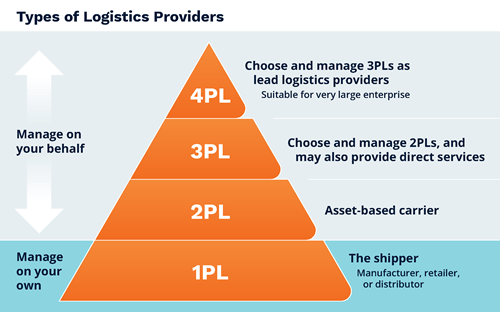 To understand the difference between a freight forwarder vs 3PL, it helps to start with a quick explanation of “PL” terminology.
If you, as the shipper, manage logistics internally, you are the first party. Asset-based carriers – airlines, ocean carriers, rail providers, and trucking companies – are second parties (2PLs). Third-party logistics providers (3PLs) manage these carriers on your behalf, while fourth-party logistics providers (4PLs) oversee multiple 3PLs as a single strategic point of control.
Freight forwarding focuses primarily on transportation execution and international shipping services. A 3PL, by contrast, often manages a broader scope of outsourced logistics, including warehousing, distribution, and contract logistics. Many global providers, including Dimerco, operate as both a freight forwarder and a 3PL, offering integrated freight forwarding, customs brokerage, and contract logistics solutions.
Large enterprises working with multiple providers may engage a 4PL to coordinate freight forwarders and 3PLs across regions, ensuring consistency, visibility, and centralized control.
Freight Forwarder vs Freight Broker: What’s the Difference?
Another common comparison is freight forwarder vs freight broker. Both act as intermediaries between shippers and carriers, but freight brokers typically focus on domestic transportation. Freight forwarders specialize in international shipping, where cross-border movements introduce added complexity such as customs clearance, trade compliance, documentation, and country-specific regulations.
When cargo crosses borders, these requirements often exceed the internal capabilities of shippers, making customs brokerage and freight forwarding services essential.
Can’t I Just Go Directly to the Carrier?
In most cases, no, or at least not efficiently. For air freight, shippers generally must work through an authorized cargo agent. For ocean freight, carriers usually require high, consistent volumes before contracting directly with a shipper. Even when direct contracts are possible, they limit flexibility.
Working with a freight forwarder gives you access to multiple carrier options, routes, and schedules. Just as a business traveler compares multiple flights, freight forwarders compare carriers and service levels to identify the best solution for each shipment.
What About Freight Marketplaces?
Freight marketplaces function like online travel platforms for cargo bookings. While they can simplify rate comparisons, international freight forwarding involves far more complexity than booking a flight.
A single international shipment may require origin trucking, export clearance, international carriage, customs brokerage, deconsolidation, and final delivery. All of which are governed by different regulations in different countries. Software alone cannot manage these variables or intervene when problems arise.
Freight marketplaces still rely on forwarders behind the scenes. While the technology may speed up quoting, it can also weaken the strategic relationship between shipper and freight forwarder, a relationship that becomes critical when disruptions occur.
What Should I Look for When Choosing a Freight Forwarder?
When evaluating freight forwarder services, consider the following criteria:
- Capacity in Your Core Lanes. Forwarders with strong volume in your key trade lanes can secure capacity and competitive rates through established carrier relationships. Dimerco, for example, combines global coverage with a strategic focus on Asia-Pac, connecting Asia with North America and Europe.
- Owned Local Office Network. An owned-office model delivers greater service consistency than agent-only networks. Local teams understand country-specific regulations, work in local languages, and follow shared SOPs.
- Strong IT Integration Capabilities. Data visibility and system integration are critical. Look for a freight forwarder with in-house IT resources that can support API, EDI, and customized reporting without relying on third parties.
- Multiple Service Offerings. Integrated international shipping services, including customs brokerage, cargo insurance, and warehousing, reduce complexity and streamline coordination.
What Are the Benefits of Freight Forwarding Services?
- Cost Savings. Forwarders leverage volume-based carrier rates and cargo consolidation, including less than container load (LCL) and full container load (FCL) strategies.
- Access to Capacity. Established freight forwarders secure space even during tight markets.
- Flexibility. Forwarders evaluate multiple modes, routes, and carriers to match your service and cost requirements.
- Expertise. Up-to-date knowledge of customs regulations, duties, and trade compliance reduces risk and delays.
- Focus on Your Core Business. Outsourcing international shipping execution allows internal teams to focus on growth rather than paperwork and coordination.
The Ultimate Role of the Freight Forwarder
So, back to the original question: What does a freight forwarder do? In short, they provide knowledge of all logistical, regulatory, and compliance requirements associated with international shipments – and execute them on your behalf. By combining expertise, carrier access, and technology, they make global trade more efficient, predictable, and scalable.
To learn more about what a freight forwarder can do for your business, contact Dimerco today.
