Home »
Navigating Logistics And Supply Chain Challenges As Taiwan Shifts Manufacturing To North America
Why Logistics Will Determine the Speed and Success of Taiwan’s North American Expansion
Deciding to expand into North America is only the first step. What comes next is harder: getting parts to new facilities on time, staying compliant as tariff rules change and keeping track of shipments across more borders than ever. This guide covers the logistics pressure points Taiwan’s manufacturers are running into in the U.S. and Mexico, plus practical ways to handle each one so the new network delivers the resilience it was built for.
EXECUTIVE SUMMARY
Taiwan’s manufacturers are moving a significant share of semiconductor and electronics production into the United States and Mexico — led by TSMC’s $265 billion U.S. fab investment and followed by Electronic Manufacturing Services (EMS) giants Foxconn, Pegatron, and Wistron, which are expanding server assembly across the region. But the shift comes with daunting challenges. These companies are relocating parts of an entire industrial ecosystem that was optimized over decades around East Asia.
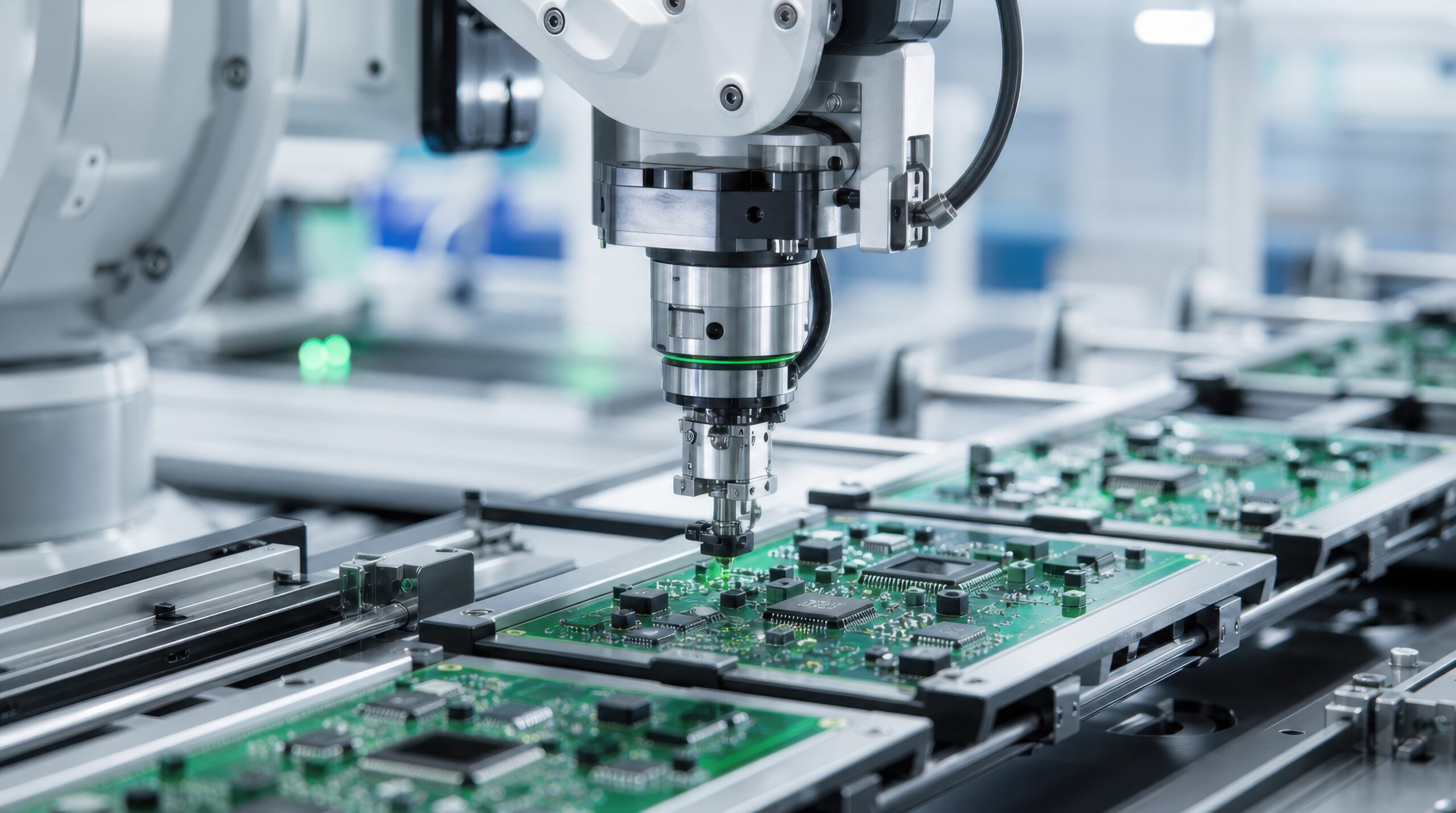
A shift to North America means that formerly localized supply chains will become more fragmented and remain dependent on upstream components from Asia and Europe; tariff assignments will become more complex as original components, assembled components, and finished products may come from different countries; smooth U.S.-Mexico cross-border logistics will be critical as suppliers for Taiwan-based EMS companies expand server assembly in Mexico to feed U.S. demand.
The goal of this reconfigured supply chain is greater resilience, specifically, a more diversified model that puts production closer to key customers, is less prone to shipping disruptions, and less subject to trade conflicts and tariff risks. But the strategy will fail unless this new model can be executed efficiently.
In this paper, we’ll examine the significant logistics and supply chain challenges created by the shift in manufacturing from Taiwan to North America and provide a strategic roadmap for how they can be overcome.
Compared to Taiwan’s tightly clustered “Science Park” model, manufacturing in North America involves:
- More border crossings and more complex tariff exposure per shipment
- Longer, less predictable supply lines for spare parts, consumables, and engineering support
- A thinner, still-maturing local supplier base
- Greater reliance on cross-border trucking and customs clearance between the U.S. and Mexico
- Harder-to-achieve visibility across a much larger geographic footprint
Manufacturers that plan their logistics strategy around these realities — rather than treating logistics as an afterthought — will be far better positioned to make North American expansion pay off.
How Dimerco Helps
For high-value semiconductor and AI server shipments, manufacturers need more than transportation capacity—they need a partner that can protect sensitive cargo, maintain supply continuity, provide end-to-end visibility, and coordinate increasingly fragmented manufacturing and inventory networks.
Semiconductor Supply Chains Are Going Regional
Production that was once concentrated in a few core markets is now being rebuilt across new regions, often from the ground up.
Navigating the Global Semiconductor Supply Chain
Understanding the global semiconductor supply chain and exploring the complex journey of chips powering our world.
WHAT’S DRIVING THE SHIFT
Taiwan manufacturers are pursuing greater resilience against a stack of compounding geopolitical and market pressures:

U.S.-China trade tensions and tariff mitigation
Diversifying production reduces exposure to tariffs and export controls tied to China-based manufacturing.
Rising AI demand in the U.S.
Hyperscalers and AI infrastructure customers increasingly expect production closer to where servers and chips are deployed.
CHIPS Act subsidies
U.S. federal incentives have accelerated fab commitments that might otherwise have taken years longer.
Customer and political pressure
More end customers demand geographic diversification as risk management, not just cost management.
Taiwan Strait geopolitical risk
Concentration of risk around Taiwan is prompting manufacturers and their customers to build redundancy elsewhere.
Factors Driving Taiwan-U.S. Expansion

Tariffs

AI Adoption
CHIPS Act Subsidies

Political Pressure

Geopolitical Risk
2026 Trade Compliance Outlook
Have we experienced a fundamental shift in trade policy?
Freight Strategies for High Value Cargo
To reduce exposure to theft and supply chain disruption, shippers are shifting from a lowest-cost mindset to a lowest-risk freight strategy.
Key Takeaway
The shift to North America isn’t a single decision — it’s five converging pressures pushing in the same direction. That convergence is why the trend is accelerating rather than plateauing.
WHO’S LEADING THE SHIFT
Taiwan’s outbound investment into North America has climbed sharply in recent years, even as investment into mainland China has pulled back — a reallocation that shows how seriously Taiwan’s largest manufacturers are taking this transition. Taiwan has become one of the top 15 sources of foreign direct investment in the U.S., with $14.8 billion in investment stock in 2024, and an additional $20-$30 billion in non-TSMC investments in the semiconductor and AI sectors in 2027.
TSMC is the leading example of Taiwan’s Foreign Direct Investment, with an additional $100 billion announced for 2026, bringing total U.S. commitments to $265 billion. This investment will result in four additional advanced semiconductor manufacturing facilities, bringing the total to 12 leading-edge semiconductor and packaging facilities.
Investment by Taiwanese enterprises on both sides of the U.S.-Mexico border is reshaping North American supply chains. Taiwan-owned factories in Mexico are providing key IT hardware for the U.S. data center build-out, and Taiwan companies are making increasing investments in Texas, supporting U.S. manufacturing reshoring.
Mexico’s exports of data center equipment to the U.S., particularly from Taiwan-invested firms, have risen rapidly, exceeding $70 billion in 2025. Further production is set to come online in the coming months.
But the shift extends well beyond semiconductors — Foxconn, Pegatron, and Wistron are all expanding server and device assembly in the U.S. and Mexico to stay close to AI infrastructure customers and reduce tariff exposure.
More Taiwan manufacturers have announced investments of $75 million to $250 million for new and expanded facilities in Juarez to produce servers. Quanta Computer disclosed large investments and a capacity expansion in Monterrey to produce AI servers and advanced electric vehicle components.
Following the major manufacturers, their supporting suppliers are also establishing or expanding operations in Texas and Mexico. For example, Taiwan-based LITEON, a power-management supplier supporting AI-server infrastructure, has announced an advanced-manufacturing campus in McKinney, Texas. This manufacturing shift involves not only leading manufacturers but also the broader semiconductor and electronics ecosystem, creating logistics demand across the supply chain.
Dimerco Taiwan: Logistics Solutions for Global Technology Supply Chains
Learn how Dimerco Taiwan keeps time-critical cargo moving efficiently worldwide.
Shipping from Taiwan to the U.S.: A Complete Guide
If your business relies on shipping from Taiwan to the U.S., understanding your logistics options can help you reduce costs, improve efficiency, and ensure regulatory compliance.
Navigating logistics and supply chain challenges as Taiwan shifts manufacturing to North America
Why logistics will determine the speed and success of Taiwan’s North American expansion
NEW LOGISTICS PRESSURE POINTS
As Taiwan’s manufacturing footprint expands across North America, logistics teams face pressure points that can delay ramp-up or quietly inflate costs.

Geographic Fragmentation
Even chips fabricated in Arizona depend on a global web of inputs: lithography equipment from Europe, specialty chemicals from Japan, wafers and substrates from across Asia, and packaging/testing that, for now, still often happen in Taiwan. That fragmentation means higher transport costs, more variable lead times, more difficult inventory planning, more border crossings for partially finished goods, and more points where a single disruption can halt production.
Managing this more distributed supply chain raises the bar for logistics partners. Shippers need strong capacity in Asia-to-North America lanes, and requisite expertise in end-to-end tracking and trade compliance. Shipments may cross many borders, and each one represents a potential delay or added cost.
6 Supply Chain Pressures Shaping AI Data Center Logistics
Logistics is the backbone of the global AI buildout.
Getting Global Semiconductor Transportation Right
The semiconductor industry is one of the world’s most globalized industries.
How Dimerco Helps
Connect with a logistics partner that offers strong local, on-the-ground support in North America, paired with the reassurance of working with a fellow Taiwanese company as clients establish operations far from home.
Key Takeaway
Fragmentation isn’t a temporary side effect of the shift; it’s a structural feature of the new model. Manufacturers need logistics partners built for multi-region coordination, not single-country execution.
Case Study: Logistics Solution for AI Server Manufacturer in Central Texas
Dimerco has been developing a logistics solution to support the supply chain for an AI server manufacturer with multiple production nodes in the Central Texas region.
The proposed operation is designed around an initial inventory of approximately 2,500 pallets, with the ability to scale to approximately 5,000 pallets as production reaches full capacity. Daily outbound requirements are expected to reach approximately 150–200 pallets, making warehouse location, inventory accuracy, operational responsiveness and system capability critical to maintaining production continuity.
Rather than treating the warehouse as a standalone storage facility, Dimerco’s solution positions it as a regional inventory and JIT distribution hub integrated into the customer’s broader international supply chain.
Components and semi-finished goods arriving from Asia can be managed through international transportation and customs clearance before entering the regional hub. Inventory can then be allocated and replenished to individual manufacturing locations based on production requirements.
The solution is also designed to scale alongside the customer’s production ramp-up, allowing inventory and distribution capacity to expand without requiring the customer to redesign its logistics network each time production volume increases.
Developing a North American Supplier Base
Taiwan’s highly successful “Science Park” model concentrates suppliers, fabs, and service providers within roughly 20 kilometers of hubs like Hsinchu, Taichung, and Tainan. North America offers nothing like that density. Manufacturers operating new U.S. facilities need to import spare parts, consumables, engineering expertise, and packaging services, often from far outside their immediate region.
These distances create logistical vulnerabilities because fabs require continuous uptime, ultra-fast parts replacement, and highly synchronized supplier deliveries, and even a delay of a few hours can be extremely expensive.
A practical approach is to position critical parts and inventory closer to the factories and use regional warehouses, logistics hubs, and scheduled trucking to shorten response times.
Keep in mind that different product categories create different logistics requirements. For example, semiconductor and electronic components may require time-critical air freight, while power, cooling, and other larger subassemblies may require different transport and handling arrangements. Supply-chain planning and inventory positioning are critical factors in developing a North American supplier base.
Of course, this means higher inventory and warehousing costs. Companies need to understand that in North America, it may not always be possible to achieve low inventory, low cost, and fast response at the same time. There has to be a balance between cost and supply chain reliability.
The distance itself cannot be removed, so companies still need to balance speed, cost, and stability. The goal should therefore not be to replicate the density, but to replicate the responsiveness.
That requires a different supply chain model: one built around strategic inventory positioning, regional logistics hubs, service logistics, JIT distribution, digital visibility, and coordinated end-to-end execution.
Dimerco Helps Tech Company Scale With Global Distribution from Taiwan
Dimerco’s Contract Logistics team handles order fulfillment to consumers in North America, Europe, and a growing number of other countries from one of Dimerco’s Taiwan distribution centers.
How Dimerco Helps
- Build virtual proximity through forward-positioned inventory, regional warehousing, dedicated transportation lanes, and centralized visibility.
- Dimerco can design multimodal solutions based on transit time, cost, and reliability, such as Air + Truck, Ocean + Truck, Rail + Truck, or different airport and seaport gateways combined with inland transportation.
- If one airport, port, rail route or service is delayed, another mode or gateway can be used as an alternative.
- Dimerco also actively manages inland transportation between major airport gateways and final consignees
Key Takeaway
North America’s geography makes it difficult to avoid higher inventory and logistics costs. Invest in strategic positioning and resilience as a form of insurance, not overhead, in this complex environment.
Tariff Complexity
Where a product’s components originate and where final assembly happens can radically change how customs authorities classify a shipment and what it costs to move it. Given the incentives for Mexico locations, products and components will continue to cross multiple borders for the foreseeable future.
Baseline tariffs, “special” tariff actions, exclusions, exemptions, correct HS code classification, and country-of-origin determination in the face of sub-sourcing and transshipment all add layers of complexity. Keep in mind that these measures apply not only to finished chips but also to servers, capital equipment, chemicals, and AI infrastructure components.
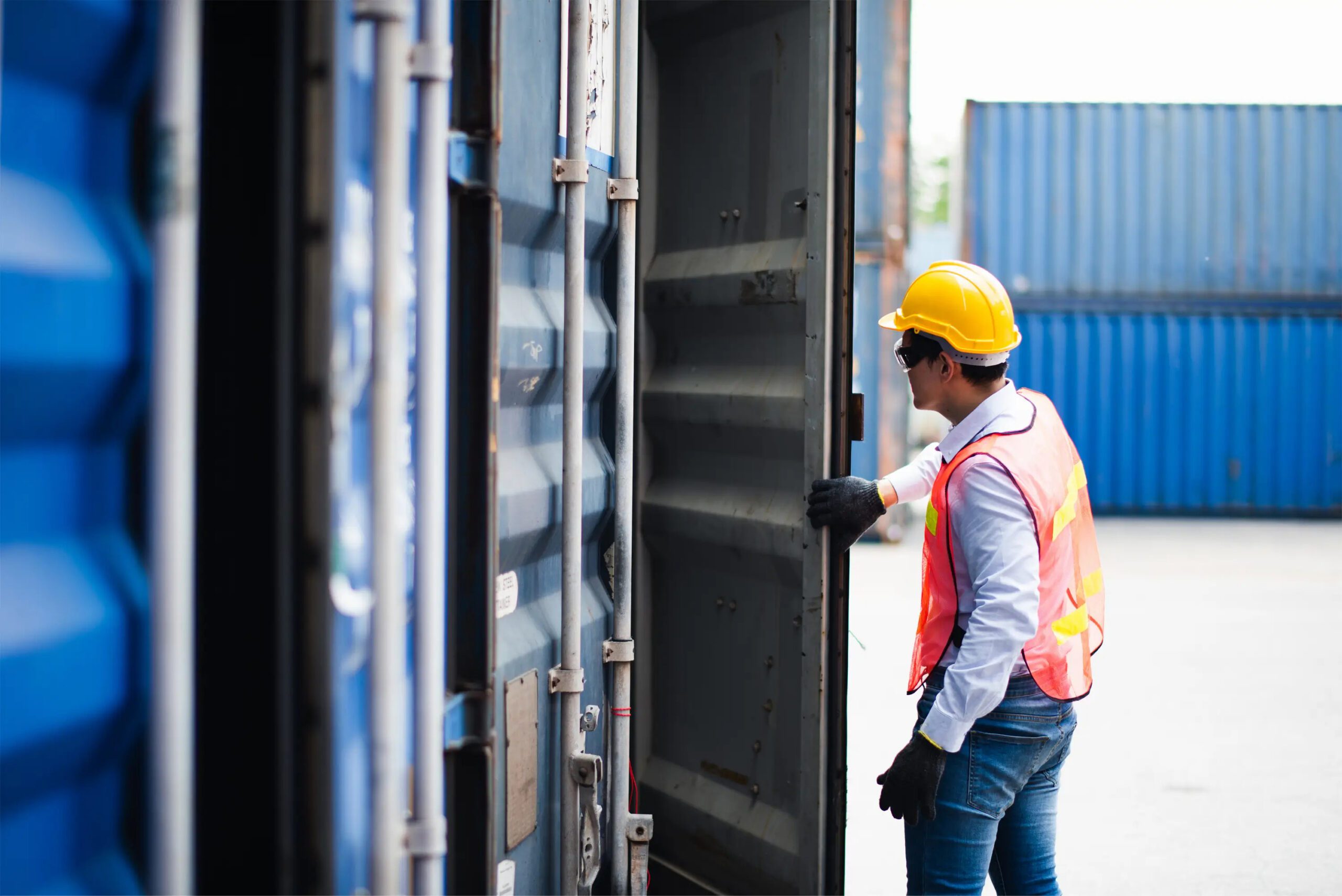
Shippers must keep in mind that customs responsibility cannot be completely handed over to the logistics provider. The customer still has the best understanding of the product’s materials, function, BOM, and manufacturing process.
One common issue is that companies continue using the same HS code for many years without reviewing it. Another is that production locations change, but the country-of-origin determination is not reviewed accordingly. With tariffs changing more frequently, it’s critical to keep this information in compliance with current regulations.
A more proactive, coordinated approach is for the shipper to assign clear ownership around trade compliance (in smaller firms, this responsibility is often part of someone’s broader role); and having an up-to-date database of HS codes and verified countries of origin. Since shippers are often forced to make decisions (e.g., sourcing suppliers from different countries) while the tariff picture is still evolving, it’s wise to coordinate closely with forwarder and customs broker partners that track tariff changes on a daily basis.
Tariff Engineering Duty Reduction Guide
Elevated tariff environments require a comprehensive approach to trade compliance and tariff mitigation strategies.
Tariff Deadlines Reshape Supply Chain Planning
Importers are dealing with a policy environment where rules can change rapidly, making planning more difficult.
How Dimerco Helps
Dimerco has its own customs brokerage and Trade Compliance resources to resolve issues before the shipment moves.
We recommend moving Customs and Trade Compliance planning to the front end of the supply chain.
Key Takeaway
Tariff management isn’t a one-time classification exercise — it’s an ongoing discipline. The environment changes faster than most internal trade teams can track alone.
U.S.—Mexico Cross-Border Complications
Taiwanese electronics firms are increasingly locating AI servers and electronics assembly in Mexico, drawn by lower operating costs, proximity to the U.S., and more favorable tariff treatment than in Asia. That strategy only pays off if cross-border trucking and customs clearance are reliable — border delays undermine exactly the predictable, time-definite flows that semiconductor and server production depends on.
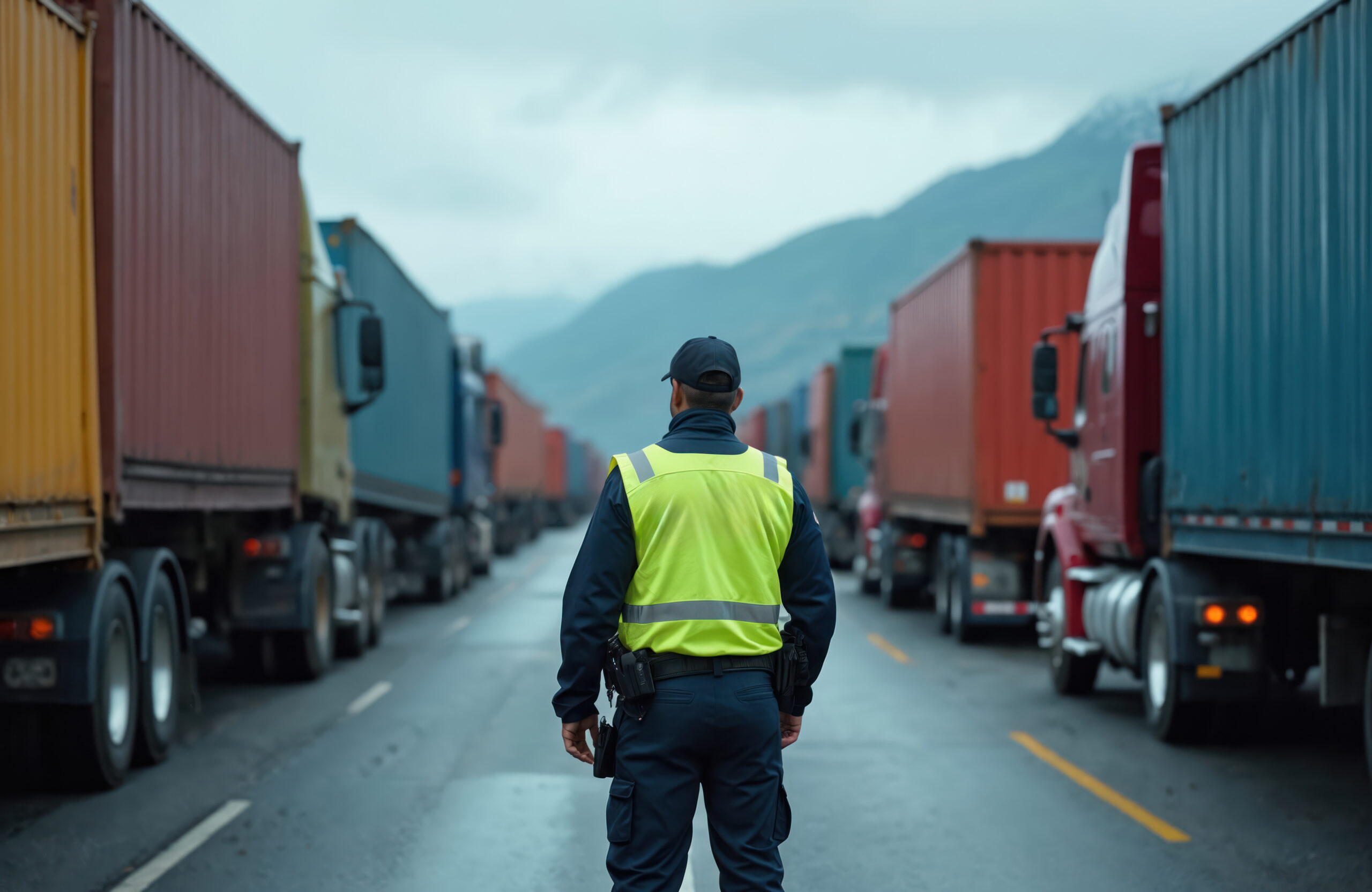
The primary challenge is usually the uncertainty around border clearance, truck handoff, and inland delivery timing. One common approach is to use bonded warehouses or cross-border logistics points near the U.S.-Mexico border as a buffer before or after the border.
The typical supply chain flows from Asia to Mexican manufacturing locations, then by truck through Laredo or El Paso into Texas. The Guadalajara–Laredo–Dallas–Fort Worth routing involves approximately 18-24 hours of driving, while Ciudad Juárez–El Paso can be same-day, but border clearance, document preparation, customs brokers, and carrier handover can determine the actual delivery time.
Dimerco’s expertise with Mexico’s IMMEX program can reduce duty and VAT exposure on materials imported into Mexico for export manufacturing.
By combining the more mature U.S. logistics network with border warehousing, customs clearance, and cross-border trucking, the customer can manage inventory and delivery timing with more flexibility.
How Dimerco Helps
Pre-planning customs clearance, border crossing, and inland transportation, together with shipment-status visibility in the system, can improve ETA predictability.
Confirm the documents, customs process, trucking arrangement, and handover process before the shipment reaches the border, rather than trying to solve these issues after the truck arrives.
Assisting with USMCA expertise.
Mexico’s IMMEX Program: Benefits and Pitfalls
Explore IMMEX benefits, compliance requirements, and potential pitfalls for manufacturing in Mexico.
How IMMEX Supports Expansion into North America
Explore how China-based manufacturers use IMMEX to support production in Mexico and US trade.
Key Takeaway
The U.S.-Mexico corridor is one of the fastest-growing lanes in this shift — and one of the least forgiving of an inexperienced logistics partner.
Supply Chain Visibility and Global Coordination
As supply chains stretch across a much larger geographic footprint, real-time tracking becomes both more important and more difficult. Visibility often stops at the tier-one supplier. Beyond that, data lives in disconnected systems across suppliers, carriers, and logistics partners, creating blind spots. Coordinating a network of suppliers, 3PLs, and carriers across time zones and languages makes it harder to react quickly when something goes wrong.
For a fragmented, multi-node supply chain, the challenge lies in coordinating across different countries, factories, and logistics points.
Good visibility means a centralized view across forward inventory, regional warehouses, and dedicated transportation lanes, so teams can respond the moment conditions change. Dimerco pairs global oversight with local execution: monitoring events worldwide — from volcanic activity to mechanical failures at ports — and proactively advising clients in real time on rerouting and alternative transportation options.
How Dimerco Helps
Local Execution, Global Oversight
With control tower visibility, shipments can be tracked from booking through final delivery in Dimerco’s system.
- Dimerco’s global offices and the customer see the same shipment information, location, and status.
- Customers can log in to the Dimerco system or receive customized automated reports by email.
- If there is a delay, rerouting, or other exception, local teams quickly act on the same information.
- Local teams handle the execution, while a common system, reporting structure and Control Tower keep the whole network aligned.
- Through My Dimerco, customers can access an integrated portal that provides a consolidated view of air freight, ocean freight, customs, and warehousing activities.
- At the warehouse level, Dimerco’s WMS and PDA-enabled operations support receiving, inventory control, picking, outbound processing, and transaction traceability, helping customers maintain visibility and control as inventory moves between different nodes.
Beyond Visibility: Supply Chain Intelligence
Dimerco can go beyond shipment tracking by combining transportation, customs and inventory information to provide supply chain analysis and actionable insights.
This can help shippers evaluate:
- Inventory positioning across different markets
- Transportation mode and routing options
- Shipment and inventory patterns
- Potential supply chain bottlenecks
- JIT replenishment performance
- Opportunities to optimize transportation and inventory costs
When disruptions occur, Dimerco can also evaluate alternative routings, transportation modes, and inventory positioning strategies to reduce supply risk and protect production continuity.
MyDimerco: 24/7 End-to-End Visibility into Your Supply Chain
Track shipment performance anytime, anywhere, on any device through MyDimerco.
Connect Your Supply Chain with Dimerco Data Integration
Connect your systems with Dimerco’s platform for real-time shipment and inventory visibility.
Key Takeaway
Control-tower logistics and supply chain intelligence — global oversight, coordinated local execution —are what turn a fragmented network back into something manageable.
WHERE TAIWAN’S MANUFACTURERS ARE MOVING FASTEST
Phoenix and Dallas-Fort Worth have emerged as the fastest-growing North American hubs for Taiwanese AI and technology manufacturers as counterparts to Taipei. Growth along the U.S.-Mexico border continues, driven by the same Electronics Manufacturing Services (EMS) providers expanding their server and electronics assembly capacity, and the accompanying suppliers.

Companies are not simply moving their factories to the U.S. Their suppliers, warehouses, logistics networks, and inventory strategies also need to move and change with them. Taiwan suppliers are developing manufacturing clusters in Mexico to take advantage of labor rates, geographic proximity, and more favorable trade relations with the U.S. Cross-border Transport corridors are developing as the supply chain moves from a concentrated Taiwan model to a more regional North American network.
The real challenge is not just building the factory. The strategy requires relocating the entire supply chain to support the factory at a single location. One successful model has been to anchor manufacturing in Mexico near the border, while using U.S.-side border warehouses for raw materials or key components before cross-border delivery to the plant. This approach combines Mexico’s manufacturing and labor advantages with the maturity, visibility, and convenience of the U.S. logistics network.
The lesson is that companies should not only plan where to build the factory. They must create a service layer around the factory so that warehousing, customs, cross-border transportation, and shipment visibility are designed at the same time. The objective is to move selected logistics and support activities closer to production so that not every exception requires a response from Asia.
For manufacturers, this can mean faster material availability, shorter response times, and less disruption to the production line—effectively creating a localized service ecosystem around the factory, even when the upstream supply base remains geographically dispersed.
Early movers are learning that logistics and tariff challenges are only part of the equation. Cultural integration between Taiwanese and American workforces is proving just as important. In Phoenix, Taiwanese business associations and community councils are helping companies and their employees engage with the local community.
Phoenix Freight Forwarder for Global and Domestic Logistics
Phoenix, Arizona, has become a mecca for high-tech manufacturing driven by the expansion of industries like semiconductors, aerospace, and automotive.
Austin Texas Warehouse
Dimerco’s Austin,Texas, warehouse is strategically located near hundreds of high-tech manufacturing plants in the “Silicon Hills” area.
Key Takeaway
Logistics readiness connects a company with North America. Cultural integration is what determines how well it actually operates once it’s there.
ACCELERATE YOUR NORTH AMERICAN EXPANSION WITH LOGISTICS EXCELLENCE
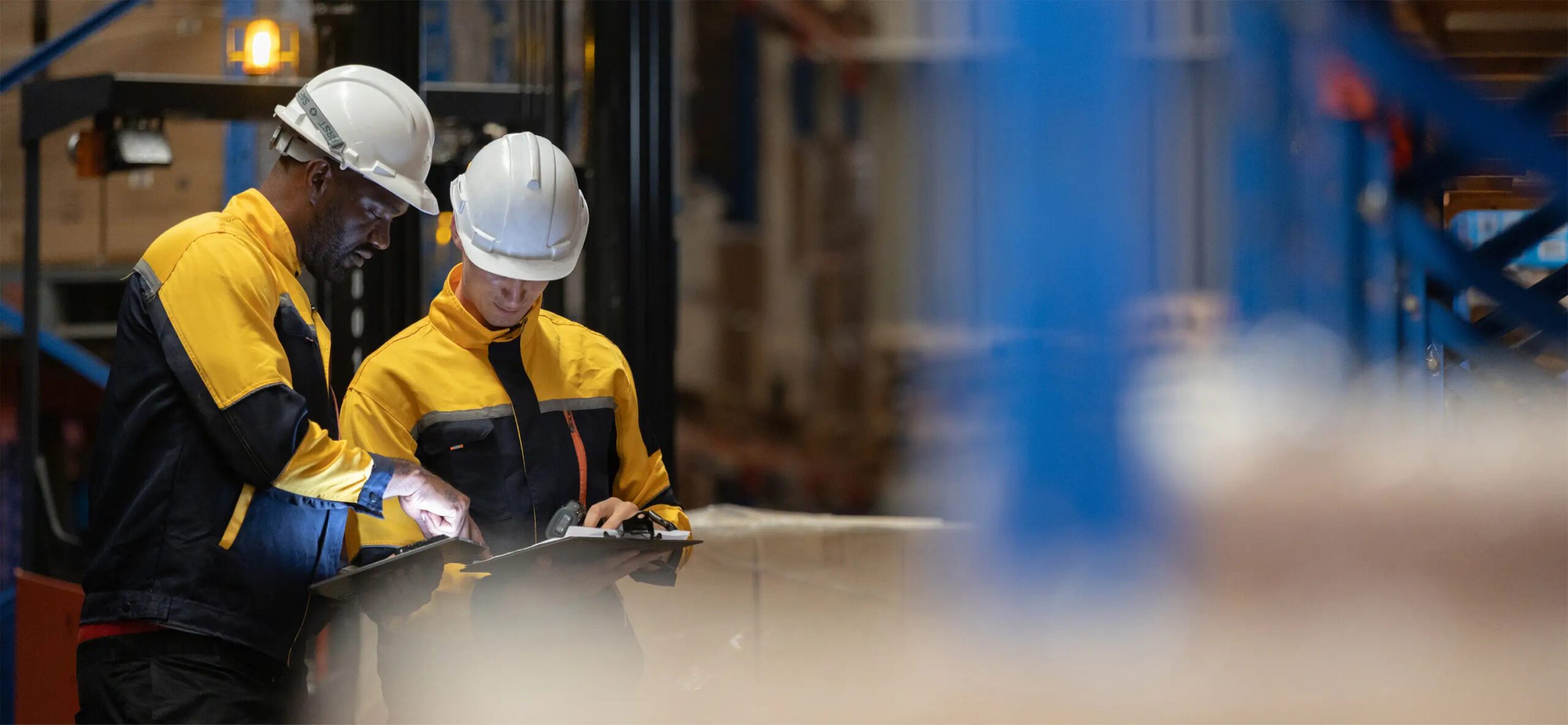
For Taiwan manufacturers expanding into North America, the essential question isn’t whether to build a more resilient, distributed supply chain — that decision has largely been made.
The next step is to execute that strategy efficiently, given the complexity it entails. The old Taiwan-centered model was extraordinarily efficient. The new North American model is more resilient but costlier and operationally more complex.
Five priorities stand out, drawn from Dimerco’s direct experience supporting Taiwan-based manufacturers and EMS providers through this transition:
- Choose a logistics partner with genuine local support, ideally one that also understands how Taiwanese companies operate.
- Build virtual proximity through forward inventory and regional warehousing to replace some of what the Science Park model once provided.
- Use dedicated transportation lanes and centralized visibility to keep fragmented networks synchronized.
- Communicate proactively when disruptions occur, so clients can reroute before delays become production stoppages.
- Manage tariff exposure actively through accurate HTS classification and programs like duty drawback, rather than treating tariffs as a fixed cost of doing business.
Companies should also prepare for the human side of this shift, as cultural integration is as real a challenge as any logistics problem on this list.
The single biggest mindset shift: for decades, Taiwan’s manufacturers optimized for centralized efficiency. Succeeding in North America means accepting some additional cost in exchange for a network that is more distributed, more responsive, and ultimately more resilient, and choosing partners who can help execute that trade-off well.
5 Factors for Choosing an International Freight Forwarder
For companies moving goods across borders, the right partner can help keep shipments moving.
Selecting an Ocean Freight Forwarder: What to Look for In Asia Trade Lanes
What logistics leaders should consider when evaluating Asia ocean freight partners.
How Dimerco Helps
Dimerco’s local team handles on-the-ground situations, while the global team coordinates resources across locations. Shippers do not need to contact different teams in every country individually.
Semiconductor & Electronics Logistics Checklist
For Taiwan manufacturers expanding into North America, the essential question is how to achieve greater supply chain resilience efficiently, despite logistical challenges. Here are key considerations in choosing a logistics partner for this new environment:
- Secure handling and storage
- Temperature and humidity control
- Shock- and vibration-sensitive transportation
- Air-ride
- White-glove delivery
- Cargo insurance and liability coverage
- Real-time inventory visibility
- Strong expertise in customs, bonded warehousing and FTZs.
- Connect capabilities under a single operating model
Key Takeaway
Do not look at logistics as separate local shipments. Look for a partner that can connect the global network, information, and execution as one supply chain.
Dimerco connects Asia with the world like no other global 3PL.
We integrate air and ocean freight, trade compliance and contract logistics services to make global supply chains more effective and efficient. The majority of our global shipping projects connect Asia’s logistics and manufacturing hubs with each other and with North America and Europe.
We serve customers from 150+ Dimerco offices, 80+ contract logistics operations, and 200+ strategic partner agents throughout China, India, Asia Pacific, North America, and Europe.
[email protected] | dimerco.com
© Dimerco Express Group. The information in our publications is taken from a variety of sources based on the information available at the time. It is shared with the Dimerco community for informational purposes only, and we do not accept any liability or responsibility for reliance on this information.