
Global supply chains continually adapt to shifting trade policies, fluctuating manufacturing costs, and new regulatory requirements. For businesses reliant on global sourcing, import duties represent a significant portion of total landed costs.
When businesses face elevated tariff environments, protecting profit margins requires more than negotiating lower freight rates or finding cheaper raw materials. It requires a comprehensive approach to trade compliance and tariff mitigation strategies.
Among the most effective strategies for managing these costs is tariff engineering.
While the term may sound highly technical, tariff engineering simply making legitimate product, sourcing, or manufacturing decisions before importation that affect a product’s final customs classification.
When executed correctly, this practice allows importers to legally reduce duty costs while remaining fully compliant with customs regulations.
Understanding tariff engineering requires familiarity with fundamental trade compliance concepts:
- Tariff classification determines the appropriate duty rate for imported goods.
- Country-of-origin rules establish where a product is considered to have been manufactured.
- Customs valuation determines the value on which duties and taxes are assessed.
What is Tariff Engineering?
Tariff engineering is a legally recognized trade compliance strategy where an importer intentionally designs, manufactures, or sources a product in a specific way to qualify for a lower duty rate when it crosses the border.
The core principle is that customs authorities assess duties based on the condition of the goods at the time of importation.
If a product can be manufactured or packaged differently before it arrives at the port of entry, it may fall under a different tariff classification with a more favorable duty rate.
Tariff Engineering vs. Customs Fraud
It is critical to distinguish lawful tariff engineering from customs fraud, misclassification, or tariff evasion.
Misclassification occurs when an importer declares a product under an incorrect, lower-duty commodity code.
Customs fraud involves intentionally misrepresenting the nature, value, or origin of imported goods.
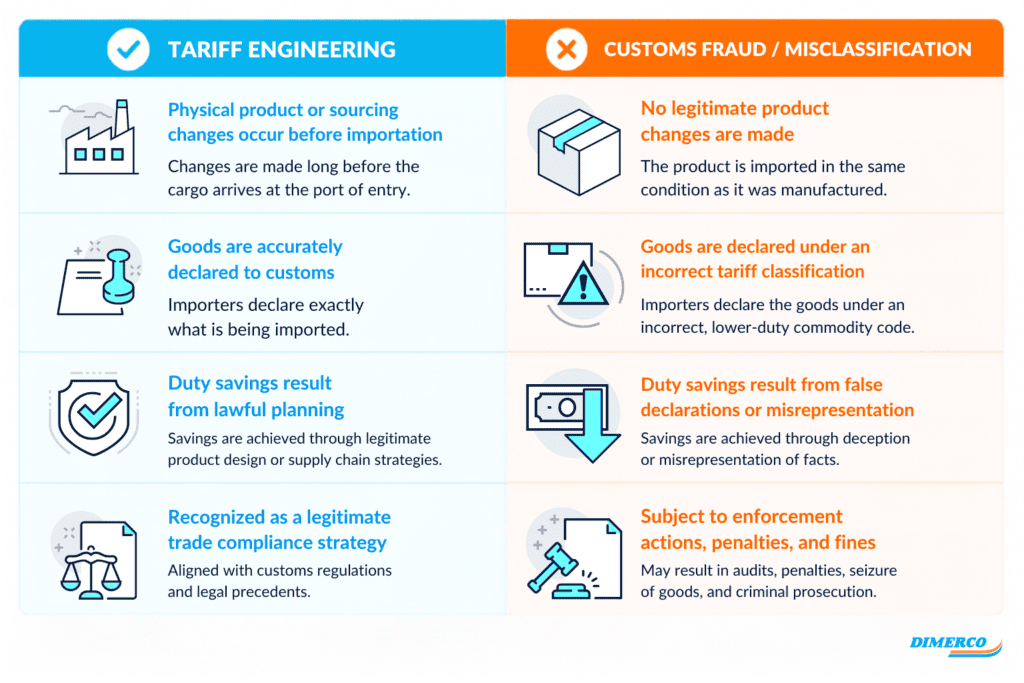
Tariff engineering, by contrast, is transparent. The importer accurately declares the goods being imported. The duty savings result from a deliberate physical change to the product or a strategic shift in the supply chain that occurs before importation.
United States courts have historically upheld the right of importers to fashion their merchandise to obtain the lowest possible rate of duty, provided the imported product is genuine and accurately declared upon entry.
Why Importers Are Prioritizing Tariff Mitigation Strategies
Historically, many businesses viewed customs duties as a static cost of doing business that could be passed on to the end consumer.
However, changing macroeconomic conditions have forced procurement professionals, supply chain managers, and finance teams to take a more proactive approach to tariff-related costs.
Trade tensions and high-tariff environments have altered global sourcing strategies. The application of punitive tariffs, such as those impacting U.S.-China trade routes, has drastically increased the baseline cost of importing certain commodities.
A product that once carried a nominal duty rate may now face substantially higher tariffs, making previously profitable product lines financially unviable.
Margin Pressures Are Driving Cost Optimization
Persistent margin pressures driven by inflation, variable transportation costs, and competitive retail pricing demand leaner supply chains.
As a result, operations leaders are closely evaluating every component of their landed cost models.
By reducing import duties through strategic planning, businesses can free up capital for product development, marketing, infrastructure improvements, and other growth initiatives.
Supply Chain Diversification Creates New Opportunities
Supply chain resilience initiatives are also pushing companies to diversify their manufacturing footprints.
As businesses establish supplier relationships in Southeast Asia, Latin America, or India, they have an opportunity to restructure their supplier sourcing strategies, reevaluate customs classifications and leverage different trade agreements.
Integrating tariff engineering into these broader supply chain transformations helps ensure duty considerations are optimized alongside lead times, manufacturing capabilities, and quality requirements.
The Fundamentals of Customs Classification
To understand how to reduce customs duties, businesses must first understand how customs authorities classify imported goods. International trade relies on the Harmonized System (HS), a standardized numerical method developed by the World Customs Organization.
The Harmonized System (HS)
The Harmonized System forms the foundation of virtually every country’s tariff schedule.
The first six digits of an HS code are globally standardized, allowing customs authorities, freight forwarders, and trade compliance professionals around the world to identify the core nature of a commodity. 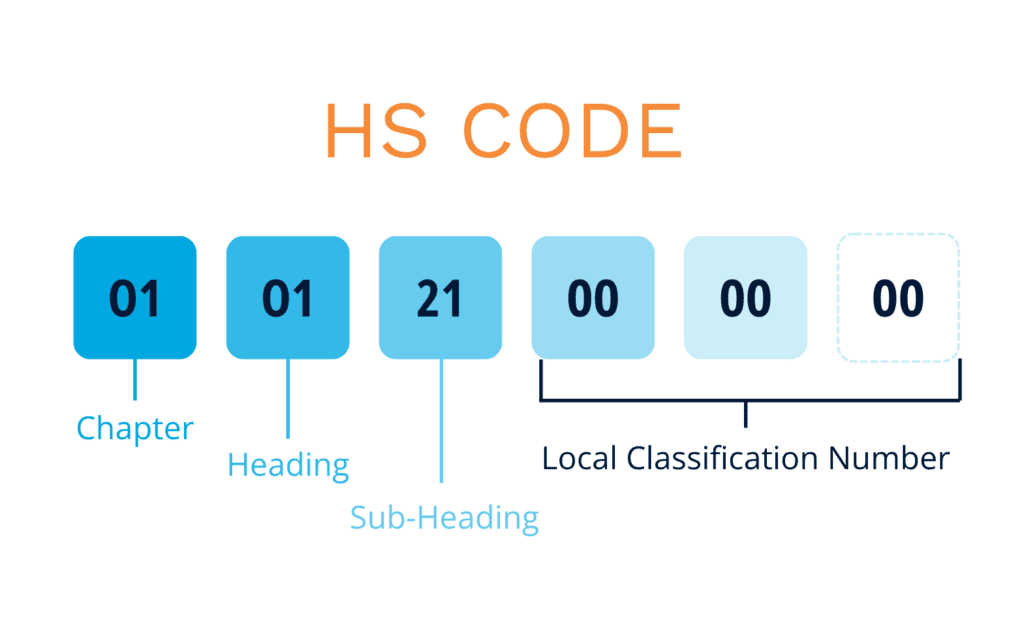 Individual countries then add additional digits to establish specific duty rates and collect trade statistics. In the United States, this expanded system is known as the Harmonized Tariff Schedule of the United States (HTSUS).
The General Rules of Interpretation (GRIs)
Customs classification is governed by the General Rules of Interpretation (GRIs), which provide the framework for determining the correct HS code for a product.
The GRIs dictate how customs authorities classify incomplete or unfinished goods, mixtures and combinations of materials, and products presented in sets for retail sale.
Why Classification Matters
Tariff engineering relies on a understanding of these classification rules. Because the HTSUS is highly detailed, even small differences in a product’s composition, intended use, or condition at importation can result in a different tariff classification.
For example, a garment classified primarily as cotton by weight may be subject to a different duty rate than one made primarily of synthetic fibers.
How Tariff Engineering Works in Practice
Implementing a tariff mitigation strategy requires cross-functional collaboration between product design, procurement, and trade compliance teams.
The most successful initiatives involve evaluating the Harmonized Tariff Schedule during the research and development phase, long before purchase orders are issued to overseas factories.
| Tariff Engineering Strategy | How it Works | Example |
|---|---|---|
| Product design & materials | Modify a product’s composition before importation to qualify for a different tariff classification. | Changing the material composition of footwear or apparel. |
| Condition at importation | Import products in a different state, such as components instead of finished assemblies. | Importing unassembled furniture rather than assembled furniture. |
| Intended use & accessories | Modify a product’s function or included accessories to influence its classification. | Separating attachments or changing a product’s primary use. |
Product Design and Material Composition
Material composition can have a significant impact on a product’s tariff classification. Footwear, apparel, and textiles are classic examples of industries where relatively minor design adjustments can produce substantial duty savings.
The import duty on a pair of shoes can vary wildly depending on the percentage of the upper or the sole that is composed of leather versus rubber or plastic.
By collaborating with designers, trade compliance managers can suggest material substitutions that maintain the shoe’s aesthetic and functional qualities while shifting its classification to a tariff-friendly category.
Similarly, outerwear classifications often depend on whether the garment is designed for water resistance.
Adding a specific type of coating or adjusting the fabric blend can alter the product’s primary characteristics in the eyes of customs authorities, legally altering the duty rate without compromising the consumer appeal of the jacket.
Condition at the Time of Importation
Because customs authorities assess duties based on the exact condition of the goods when they cross the border, importing components rather than finished assemblies can serve as a powerful tariff mitigation strategy.
For example, certain products may qualify for a different tariff classification when imported unassembled rather than fully assembled, provided the approach complies with applicable customs regulations.
Intended Use and Accessories
The functionality and intended use of a product also dictate its classification. A multi-purpose tool might be classified differently depending on its primary function or the accessories included in the retail packaging.
By separating specific attachments or modifying the primary function of the item, an importer can legally change its classification.
However, this strategy must be documented rigorously, as customs authorities frequently request product specification sheets and marketing materials to verify how a product is sold and utilized by the end consumer.
Supply Chain and Sourcing Strategies for Duty Reduction
Beyond physical product modifications, businesses can manage tariff exposure through strategic sourcing decisions and supply chain structuring. These methods focus on origin and valuation rather than classification.
Country of Origin and Substantial Transformation
A product’s country of origin heavily influences its duty rate, particularly when special trade programs or punitive tariffs are involved.
Determining the origin of a product is complex in modern supply chains where raw materials come from one country, sub-assembly occurs in another, and final packaging happens in a third.
Customs authorities typically rely on the concept of “substantial transformation” to determine the legal country of origin.
A substantial transformation occurs when an article emerges from a manufacturing process with a new:
- Name
- Character
- Use
If a company wishes to legally shift the country of origin to avoid high tariffs, they cannot simply route the goods through a third country for repackaging or minor assembly.
The manufacturing processes performed in the secondary country must be substantial enough to fundamentally change the nature of the product.
Moving a specific, complex manufacturing step to a facility in a different country is a legitimate strategy to alter the origin and lower the associated import duties.
Learn more in our video, Does Friendshoring Complicate Trade Compliance?, which explains why relocating production doesn’t automatically change a product’s country of origin.
Free Trade Agreements
Maximizing the use of Free Trade Agreements (FTAs) is a foundational element of trade compliance. Agreements like the United States-Mexico-Canada Agreement (USMCA) offer duty-free or reduced-duty access for qualifying goods.
However, qualifying for FTA benefits requires strict adherence to specific rules of origin, which dictate required tariff shifts and the allowable percentage of non-originating materials.
Procurement teams can engineer their supply chains by intentionally sourcing specific raw materials from FTA partner countries, ensuring the final assembled product meets the regional value content thresholds or tariff shifts required for duty-free entry.
Customs Valuation and First Sale for Export
Import duties are generally calculated as a percentage of a product’s customs value. As a result, legally reducing the declared customs value may reduce the duty paid.
The First Sale for Export rule may allow importers involved in multi-tiered transactions to use the lower price from the first sale, rather than the higher price paid by the final importer, as the customs value.
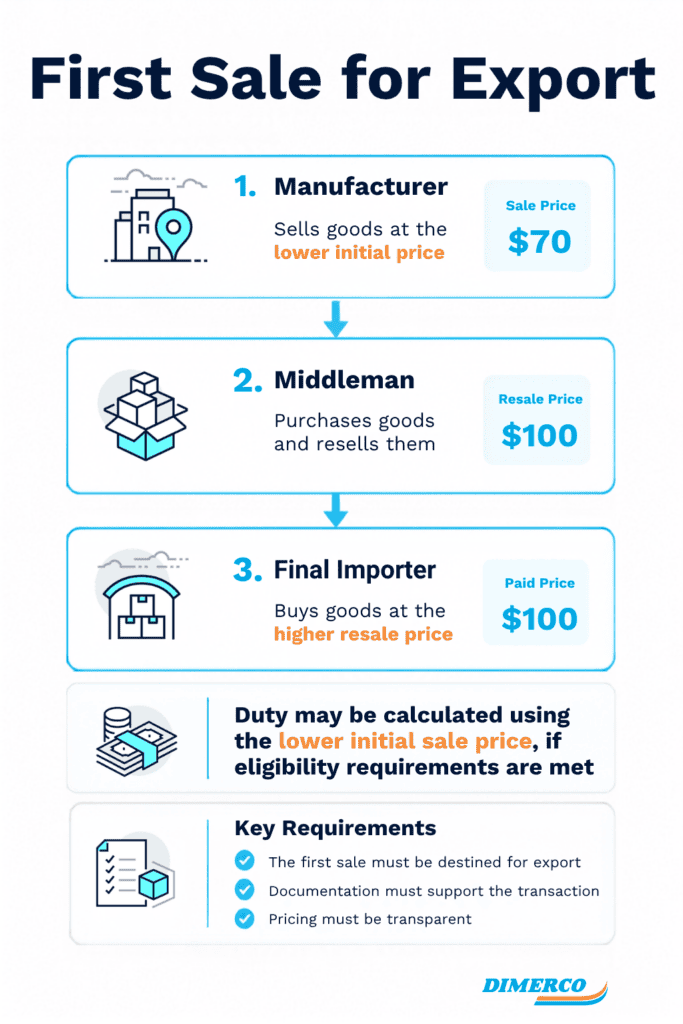
To qualify, the importer must be able to demonstrate that the first transaction was a genuine sale and that the goods were clearly destined for export to the importing country. The pricing must be transparent, the parties must operate under commercially acceptable conditions, and the documentation must support the full transaction.
When properly structured and documented, First Sale for Export may reduce the dutiable value without changing the product itself.
Compliance Risks and The Importance of Documentation
While tariff mitigation strategies offer substantial financial benefits, they must be executed with strict adherence to customs regulations.
Customs authorities, including U.S. Customs and Border Protection (CBP), heavily scrutinize imports for revenue protection.
Importers are required by law to exercise “reasonable care” when entering goods, meaning they must take proactive steps to ensure their classifications, valuations, and origins are accurate.
Documentation is Critical
The primary compliance risk in tariff engineering is failing to properly document the modifications or sourcing changes. If customs authorities audit an entry and find that the imported product does not match the declared classification, the importer can face:
- Penalties
- Cargo delays
- Increased scrutiny on future shipments
‘
It is not enough to claim a product features a new material. Importers should maintain documentation such as:
- Laboratory test reports
- Bill of materials (BOMs)
- Precise specification sheets
- Supporting technical documentation that verifies the product’s composition at the time of entry
Anti-Dumping and Countervailing Duties (AD/CVD)
Businesses must also ensure that tariff engineering decisions do not violate anti-dumping and countervailing duty (AD/CVD) regulations.
Attempting to transship a product through another country specifically to evade AD/CVD orders is heavily penalized and considered customs fraud rather than legitimate tariff mitigation.
Customs Binding Rulings
A binding ruling is a written decision issued by customs authorities upon the request of an importer, determining the correct classification, origin, or valuation of a product, often prior to its importation.
By submitting physical samples, detailed specifications, and the legal rationale for a specific classification, importers can obtain absolute certainty regarding their duty rates.
If customs agrees with the proposed classification, the importer has certainty that the tariff mitigation steps they’ve taken are compliant.
Either way, however, the ruling is legally binding, and any decision reached by CBP with respect to classification or origin must be used for future imports of the product. Rulings protect the importer from future audits or reclassifications at the port of entry.
Best Practices Before Implementing a Strategy
Successful tariff engineering is inherently proactive. Evaluating opportunities after products have already been manufactured or shipped may not yield results and may lead to compliance failures. Businesses looking to implement these strategies should follow established best practices:
1.) Integrate trade compliance into product development
Trade compliance managers should be involved during the initial design and prototyping phases. An early review of the bill of materials can help identify:
- High-tariff components
- Country-of-origin considerations
- Alternative materials or sourcing options
- Potential classification issues before production begins
This gives engineering and procurement teams time to evaluate suitable alternatives before products are finalized.
2.) Conduct a Comprehensive Landed Cost Analysis
A lower duty rate is only beneficial if the savings are not offset by higher operational costs.
Businesses should evaluate the impact of a proposed tariff engineering strategy on:
- Manufacturing costs
- Raw material costs
- Transportation costs
- Lead times
- Total landed cost
Finance and logistics teams should confirm that the projected duty savings outweigh any additional expenses.
3.) Maintain Rigorous Audit Trails
Every decision related to product classification, origin, or customs valuation should be supported by verifiable documentation.
Importers should establish procedures for collecting and maintaining:
- Vendor declarations
- Certificates of origin
- Bills of materials
- Product specifications
- Technical or laboratory documentation, where applicable
Strong audit trails help support customs declarations and reduce risk during future reviews or audits.
Build a More Cost-Effective, Compliant Supply Chain
Tariff engineering can be an effective way to protect profit margins and optimize global supply chains. By understanding customs classification, country-of-origin rules, and customs valuation, businesses can make informed product, sourcing, and manufacturing decisions that reduce duty exposure while maintaining compliance with international trade regulations.
However, these strategies require careful planning and technical expertise. Product classifications, origin determinations, and supply chain structures should not be changed without a thorough review of the applicable customs requirements and supporting documentation.
Importers should consult qualified trade compliance professionals, licensed customs brokers, or international trade attorneys before implementing a tariff engineering strategy.
Expert guidance can help businesses identify legitimate duty-saving opportunities, assess potential compliance risks, and determine whether the expected savings justify any changes to product design or sourcing.
Ready to Evaluate Your Options?
If your business is evaluating sourcing options, responding to new tariff developments, or adapting transportation strategies across Asia and beyond, connect with a Dimerco logistics specialist to explore solutions tailored to your supply chain.
