
India is an increasingly attractive market for global expansion, supported by its large consumer base and strengthening manufacturing ecosystem. However, companies entering the market must navigate regulatory requirements, especially the Bureau of Indian Standards (BIS) certification.
As BIS approval is closely tied to customs clearance, failing to prepare early can delay shipments, increase storage costs, and disrupt market-entry plans. This blog explains the BIS certification process and how companies can navigate common challenges when entering the Indian market.
What is a BIS Certificate?
BIS certification is a conformity assessment system established by the Indian government to ensure that products meet safety, quality, and environmental standards. The system is administered by the Bureau of Indian Standards (BIS) and applies to a wide range of product categories entering the Indian market.
There are two types of BIS certification: mandatory and voluntary
Mandatory Regime – This regime covers nearly 300 product categories, including electronics such as mobile phones, batteries, and home appliances, as well as chemicals, machinery, construction materials, automotive parts, and food-contact materials.
The list continues to expand as regulations evolve. For products listed under the mandatory scheme, BIS certification is a prerequisite for market entry. Without a valid BIS certificate, products cannot be manufactured, imported, sold, or displayed within India.
Voluntary Regime – Products outside the mandatory list may still apply for BIS certification voluntarily to strengthen product credibility and build consumer trust in the Indian market.
Many companies only encounter the BIS requirement at the final stage of entering the Indian market. In some cases, businesses discover this requirement only after their cargo arrives at the port, when customs clearance cannot proceed without a valid BIS certificate.
The result can be cargo held at the terminal, leading to storage and demurrage charges, delays in product launches, and disruptions to market-entry plans.
In certain situations, customs authorities may allow the goods to be re-exported. However, without BIS certification, the products cannot be sold or distributed within India.
Key Challenges in the BIS Certification Process
The BIS certification process generally involves four stages: application submission, product testing, factory inspection (where applicable), and certificate issuance.
While the framework appears straightforward, companies often encounter several practical challenges during execution.
1.) Unclear Product Scope
BIS periodically updates its mandatory certification list. For example, products such as lithium batteries and photovoltaic modules were added in recent years. Because the scope continues to evolve, many companies struggle to determine whether their products fall under the mandatory regime, making early planning and compliance preparation difficult.
2.) Complex Documentation Requirements
BIS requires detailed technical documentation, and any inconsistencies between product specifications and submitted documents can trigger multiple rounds of clarification. These repeated queries and resubmissions can significantly extend the certification timeline and disrupt planned product launches.
3.) Limited Testing Capacity
Products must be tested at BIS-recognized laboratories in India or at mutually recognized international labs. For electronics in particular, testing capacity is often constrained, resulting in long queues, limited testing slots, and delays in issuing test reports.
4.) Finding an Authorized Indian Representative (AIR)
Overseas manufacturers are required to appoint an Authorized Indian Representative (AIR) to submit the application and coordinate with BIS. Identifying a reliable and experienced AIR can itself become a bottleneck, particularly for companies entering the Indian market for the first time.
5.) Certification Timelines May Exceed Expectations
For fast-moving consumer electronics or seasonal products, BIS certification can take three to six months. Such timelines may cause companies to miss planned launch windows or delay their India market entry. Industrial products may require even longer approval cycles than consumer goods due to additional technical evaluations and safety assessments.
BIS Certification Timeline and What to Expect
While final approval timelines are determined by Indian authorities, working with an experienced partner can help minimize delays.
Based on Dimerco India’s experience, certification for non-industrial products can typically be completed within 25–45 working days after application submission, provided documentation is complete, BIS raises few queries, and both the manufacturer and the AIR respond promptly.
Companies should also plan 10–15 days beforehand for laboratory testing and document preparation.
With operations in India since 2012 and six offices across the country, Dimerco works closely with local partners, laboratories, and regulatory stakeholders to help customers navigate the BIS certification process more efficiently.
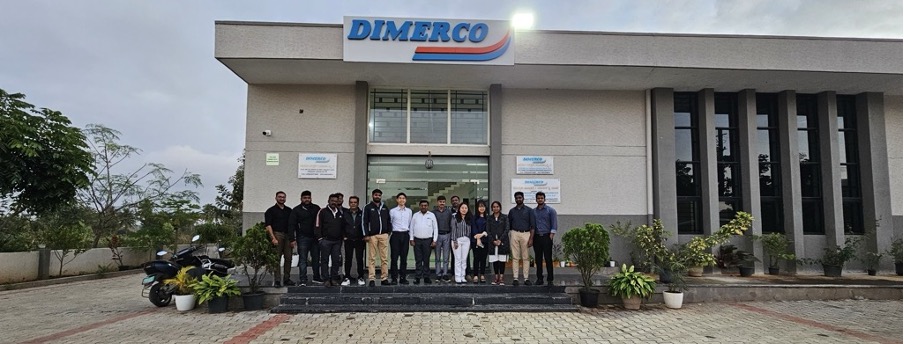
Dimerco India Team
How Can Companies Overcome BIS Certification Challenges in India?
To navigate the BIS certification process efficiently and minimize risk, companies planning to enter the Indian market should consider the following best practices:
1.) Plan Early
BIS certification should be built into the project plan from the very beginning. Ideally, requirements should be evaluated during product design or at the initial shipment planning stage, with sufficient time built into the schedule to accommodate potential testing and approval delays.
2.) Partner with Experienced Compliance and Logistics Experts
Although BIS applications must be submitted by the manufacturer through an Authorized Indian Representative (AIR), a logistics and consulting partner with deep India market and regulatory experience can provide valuable support throughout the process.
To support companies expanding into India, Dimerco has also established an Advisory Service Division in India to assist manufacturers with regulatory navigation, market entry strategy, and supply chain planning, including:
- Pre-certification consulting: Assessing whether products fall under BIS requirements and advising on the preparation of technical documentation.
- Process coordination: Maintaining close communication with the AIR, BIS-recognized laboratories, and relevant government agencies to keep testing and review activities on track.
- Sample logistics management: Arranging international sample shipments or, where feasible, sourcing equivalent samples locally in India to save both time and cost.
3.) Leverage Flexible Logistics Solutions
A capable logistics partner can synchronize shipping plans with BIS certification timelines, allowing compliance preparation and market-entry activities to progress in parallel.
If cargo arrives before certification is completed, goods may be moved into bonded warehouses in compliance with regulations to avoid costly terminal storage while certification is finalized or re-export options are evaluated.
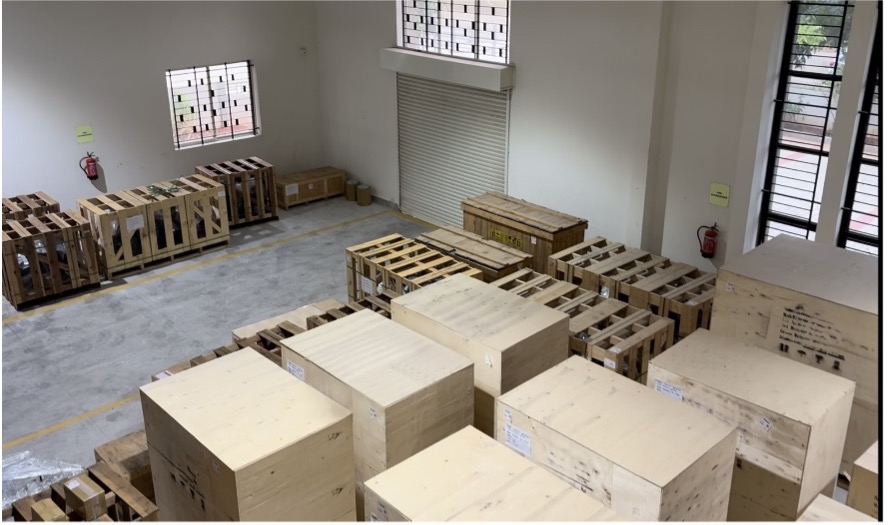
Strategies such as pre-certification warehousing and staggered shipments can further align shipping schedules with certification progress, helping optimize cash flow while reducing operational risk.
Case Study
Kunshan Abram Software Technology Co., Ltd., together with its India-based partner TSMT Technology, planned to launch a lithium battery product in India and required BIS certification within a tight timeline.
As BIS required 22 product samples to be submitted simultaneously for testing, Dimerco proposed sourcing equivalent model samples locally in India rather than shipping all units from overseas, avoiding the cost and complexity of cross-border sample logistics.
By coordinating closely with the BIS-recognized laboratory and carefully managing each stage of the process, Dimerco successfully completed the certification within 45 working days, enabling the customer to stay on schedule for its India market launch.
Choosing the Right Logistics Partner
Choosing the right logistics partner is key to navigating BIS certification and entering the Indian market smoothly.
With operations in India since 2012 and six offices across the country, Dimerco combines local regulatory expertise with global logistics capabilities to support certification coordination, customs clearance, and end-to-end supply chain execution.
Looking to expand into India? Get in touch with a Dimerco specialist to streamline your BIS certification and market entry strategy.